
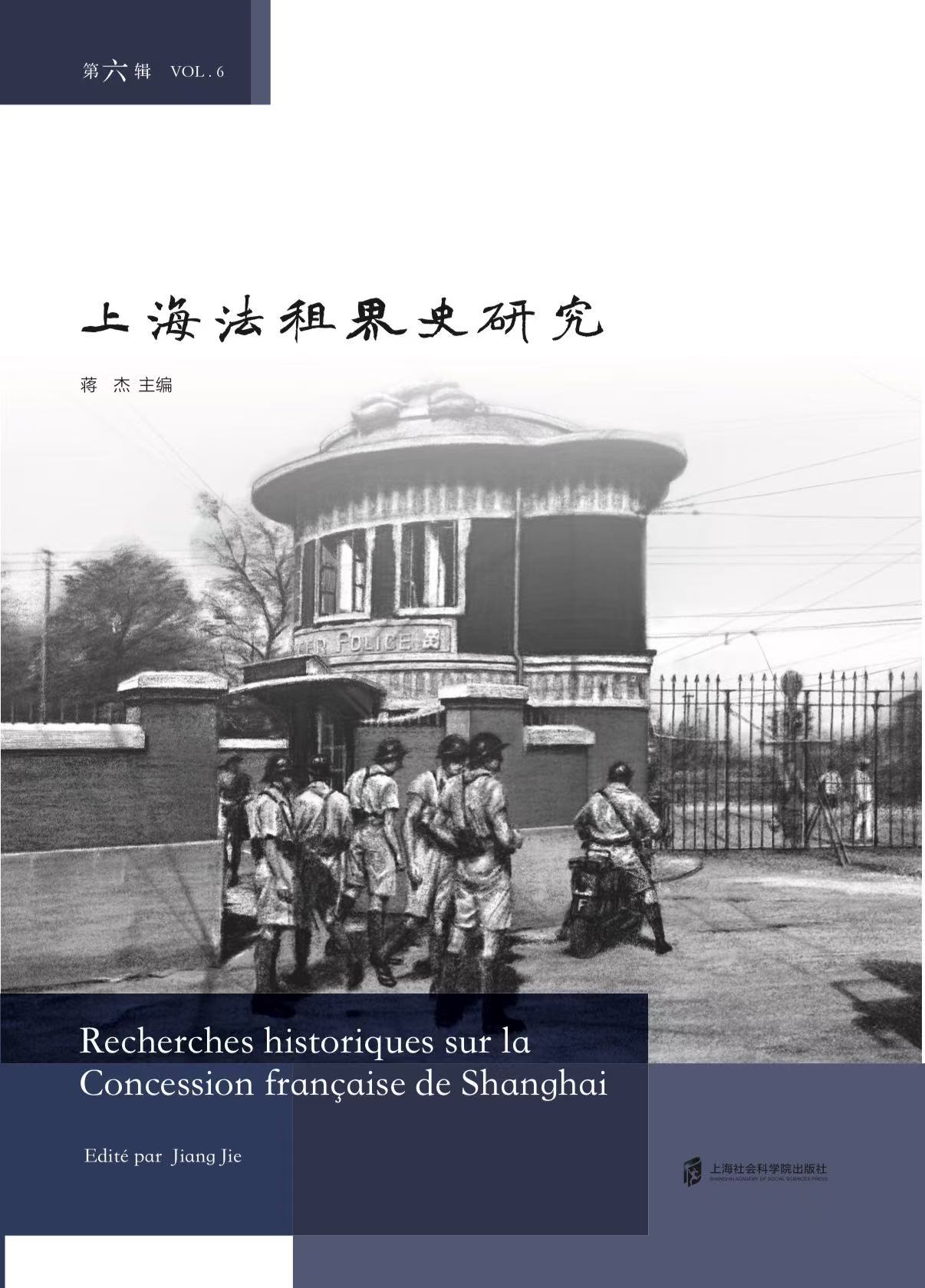
Armand, Cécile and Christian Henriot. “东方巴黎:法国人在上海的空间微历史(1942年)” [Paris of the Orient: A Spatial Microhistory of the French in Shanghai (1942)]. In Jiang Jie (Ed.), 上海法租界史研究 [Recherches historiques sur la Concession française de Shanghai], Vol. 6. Shanghai: Shanghai Academy of Social Sciences Press, 2026, p.3-24.
This paper reassesses the role of private initiatives in conjunction with governments in supporting studies in America during the late Qing-early Republic period. By employing computational methods to extract new insights from the canonical Who’s Who of Returned Students (1917), the author demonstrates that self-funded students played a crucial role in expanding the spectrum of academic pursuits and professional opportunities beyond those officially recognized as of national importance. Furthermore, the paper explores the enduring influence of family connections among those educated in America, highlighting the significance of relationships such as those with uncles, the distribution of roles among siblings, and intermarriage among students. Through two case studies, the paper illustrates the multigenerational impact of studying abroad — the Ouyang family utilized their American education to diversify their activities, while the Fei family leveraged it to ascend the social ladder.
This paper has been accepted and will appear in early 2026 in Twentieth-Century China as part of the special issue, Rethinking Study Abroad in Modern China, which I am guest-editing.
The data and code accompanying this article are available on GitHub.
This article delineates the historical context of the special issue “Rethinking the Study Abroad Movement in Modern China, 1850s–1950s,” summarizes the state of research, introduces each article, and outlines shared themes. Among these are the pivotal roles of financial considerations and of nonstate actors and informal networks in shaping international education in modern China. The five articles combine to produce a nuanced portrait of foreign-educated Chinese, complicating previous framings of overseas education as primarily an instrument of foreign soft power or of China’s cultural diplomacy. The special issue brings computational and quantitative methods into conversation with traditional historiography: the approaches complement one another. Zuo, Yang, and Liang employ a large-scale prosopographical database to trace patterns of social mobility and shifts in the Chinese meritocracy, Armand and Henriot each apply to a single directory methods that include natural language processing and network analysis, and all three articles gain contextual depth and interpretive nuance from incorporation of qualitative sources. Pelzer and Wu each draw on underutilized archives—personal papers and Rockefeller Foundation records—to uncover historical actors’ motivations and strategies.
This paper examines the formation and influence of Sino-American alumni networks between 1882 and 1936, a period marked by restrictive U.S. immigration policies and evolving transnational relations. It explores how Chinese students, educated in American universities, leveraged their academic experiences to shape China’s modernization and establish professional networks spanning both nations. Utilizing historical records, network analysis, and case studies, the chapter highlights the role of these alumni in education, business, and government. Challenging state-centered narratives, it underscores the human connections that contributed to enduring Sino-American exchanges despite geopolitical tensions.
“Bonding minds, bridging nations: Sino-American alumni networks in the Era of Exclusion (1882-1936)”, in Henriot (ed.), Modern China in Flux: Networks, Mobility, and Transformation, Berlin, De Gruyter, 2025, p. 163-239.
The chapter is available in open access.
This article examines the Rotary Club as a case study, using periodical press as its primary source to revisit debates on the public sphere and transnationalism in Republican China (1912–1949). Drawing on newly accessible digitized newspapers in both Chinese and English, it employs computational methods—including topic modeling, Named Entity Recognition (NER), Geographic Information Systems (GIS), and network analysis—to explore how the Rotary Club, as a transnational elite organization, strategically leveraged the press to promote its activities and present itself as a public-spirited entity dedicated to social welfare and international peace.
This paper is part of the special issue on China, which I am guest-editing for the Journal of Digital History. The issue is fully accessible in open access.

This paper presents an effective approach for handling two-mode networks, utilizing the concept of ‘place’ or structural equivalence as its fundamental framework. It primarily relies on the Places and igraph R packages. To illustrate this method, it employs an edge list representing students and their respective universities in the United States. The data source for this analysis is derived from the directory of an alumni club, specifically the American University Club of Shanghai, which was originally published in 1936. The paper proceeds through four main steps: (1) identification of places from the edge list, (2) transformation of the list of places into a network of places, along with its transposed network of universities, (3) visualization and analysis of the network, including community detection, and (4) the introduction of a more flexible approach grounded in the concepts of regular equivalence or k-places.
“Uncovering Places in Two-Mode Networks”. RZINE, November 2024, ⟨10.48645/nk8x-8d47⟩. ⟨hal-04784832⟩
The article is accessible in open access.
This article serves as the introduction to the special issue on Chinese digital history, which I am guest-editing for the Journal of Digital History (JDH). After presenting the papers included in this issue, it examines the significance of area studies and advocates for a paradigm shift toward computational methodologies in both Chinese studies and the broader humanities.
The special issue is fully accessible in open access.

“Unlocking Transitional Chinese: Word Segmentation in Modern Historical Texts,” in Proceedings of the Joint 3rd International Conference on Natural Language Processing for Digital Humanities & 8th International Workshop on Computational Linguistics for Uralic Languages, 2023 (with Blouin, Baptiste, Hen-hsen Huang, and Christian Henriot). https://aclanthology.org/2023.nlp4dh-1.11/
This paper addresses Natural Language Processing (NLP) tokenization challenges for transitional Chinese, which lacks adequate digital resources. The project used a collection of articles from the Shenbao, a newspaper from this period, as their study base. They designed models tailored to transitional Chinese, with goals like historical information extraction, large-scale textual analysis, and creating new datasets for computational linguists. The team manually tokenized historical articles to understand the language’s linguistic patterns, syntactic structures, and lexical variations. They developed a custom model tailored to their dataset after evaluating various word segmentation tools. They also studied the impact of using pre-trained language models on historical data. The results showed that using language models aligned with the source languages resulted in superior performance. They assert that transitional Chinese they are processing is more related to ancient Chinese than contemporary Chinese, necessitating the training of language models specifically on their data. The study’s outcome is a model that achieves a performance of over 83% and an F-score that is 35% higher than using existing tokenization tools, signifying a substantial improvement. The availability of this new annotated dataset paves the way for refining the model’s performance in processing this type of data.

This paper introduces HistText, a pioneering tool devised to facilitate large-scale data mining in historical documents, specifically targeting Chinese sources. Developed in response to the challenges posed by the massive Modern China Textual Database, HistText emerges as a solution to efficiently extract and visualize valuable insights from billions of words spread across millions of documents. With a user-friendly interface, advanced text analysis techniques, and powerful data visualization capabilities, HistText offers a robust platform for digital humanities research. This paper explores the rationale behind HistText, underscores its key features, and provides a comprehensive guide for its effective utilization, thus highlighting its potential to substantially enhance the realm of computational humanities.
This paper is accessible in open access: “HistText: An Application for leveraging large-scale historical textbases”, Journal of Data Mining and Digital Humanities. 2023 (with Baptiste Blouin and Christian Henriot). ⟨halshs-04178820⟩
In this article, we use a 1942 census of French residents to conduct a quantitative micro-history of the French community in the wake of the Japanese invasion of Shanghai. This snapshot serves as the basis for analyzing long-term demographic trends, complemented by a spatial approach built on geospatial resources developed over a decade in Shanghai. We argue that the system of power in the French Concession shaped the structural traits of the French population as a self-contained community, creating a politically, culturally, and linguistically defined space that offered French nationals opportunities and even privileges. Our study sheds light on the social characteristics of foreign communities in a transcolonial city and the spatial patterns they established in a non-Western urban setting. Methodologically, we leverage Geographic Information System (GIS) tools to bridge demography and spatial history, demonstrating the value of integrating quantitative and spatial analyses in historical research.
“Paris in the Orient: A spatial micro-history of the French in Shanghai (1942)” Urban History, 49/1, 2022, 171-189. (with Christian Henriot).
Drawing on a range of previously unpublished sources—including municipal archives, newspapers, sketches, and photographs—this article explores how advertisers in early 20th-century Shanghai sought to shape the city’s urban furniture. In this politically fragmented treaty-port characterized by rapid urban expansion, increasing traffic, economic depression, and the Sino-Japanese War, these initiatives met with mixed reactions from municipal authorities. Decorative street furniture, such as kiosks, struggled to gain traction against pressing traffic concerns. Signage elements, like transport stops and city maps, were approved on a trial basis but ultimately proved impractical. Meanwhile, electric clocks, intended as a tool for regulating urban life, found their way into Chinese districts but were rejected in the foreign concessions due to technical and security concerns. Ultimately, these projects sketched out an imagined yet negotiated vision of the city, shaped through a dialogue between private developers and public authorities. Inspired by European models, they reveal how ideas traveled across borders, even as numerous obstacles stood in the way of their implementation within the “transcolonial” context of Republican China.
“Équiper sans encombrer : le mobilier publicitaire à Shanghai dans la première moitié du XXe siècle.” Histoire urbaine, 64, 2022, 155-176.
This article is accessible in open access.
This paper examines the Rotary Club of China as a key platform for American-educated Chinese to engage with foreign elites. Through this organization, Chinese members accessed business information and networks while promoting a new ethos of service, professionalism, and philanthropy. The chapter highlights how Chinese Rotarians played an active role in integrating their non-English-speaking peers, positioning themselves as intermediaries between Chinese and foreign elites. Their ability to negotiate with Rotary International (RI)—particularly in establishing a Chinese-speaking club—demonstrates their agency in adapting international rules to China’s unique socio-political landscape. Drawing on Rotary archives, Who’s Who directories, and local newspapers, this study employs a mixed-methods approach that combines traditional archival research with digital methodologies, including statistical analysis, Geographic Information Systems (GIS), and network analysis. This integrated framework enhances our understanding of transnational networks in modern China.
“Foreign Clubs with Chinese Flavor: The Rotary Club of Shanghai and the Politics of Language”, In Cécile Armand, Christian Henriot and Huei-min Sun (ed.), Knowledge, Power, and Networks: Elites in Transition in Modern China, Brill, Leiden, 2022, 233-259.
This study presents a digital humanities approach to analyzing Republican-era elites by transforming the Biographical Dictionary of Republican China (BDRC) into a structured biographical database. It identifies editorial biases in elite selection, emphasizing political and military figures over business and artistic elites. Using network analysis, the authors reveal strong interconnections between education, government, and military institutions, demonstrating elite social mobility. The study also highlights how higher education patterns shifted from classical Confucian training to modern universities, particularly in the United States and Japan. By applying Natural Language Processing (NLP) and statistical modeling, this research challenges conventional historiographical methods and provides new insights into power structures and elite transformation in modern China.
“X-Boorman: The Biographical Dictionary of Republican China in the Digital Age”, In Cécile Armand, Christian Henriot and Huei-min Sung (ed.), Knowledge, Power, and Networks: Elites in Transition in Modern China, Brill, Leiden, 2022, 54-84 (with Christian Henriot).
In this paper, we combine natural language processing (NLP) techniques and network analysis in order to systematically map the individuals mentioned in the Biographical Dictionary of Republican China, thus revealing its underlying structure. We depart from previous studies due to the distinction we make between the subject of a biography (bionode) and the individuals mentioned within a biography (object-node). We examine whether the bionodes form sociocentric networks based on shared attributes (provincial origin, education, etc.). Our major contribution consists of annotating the links between individuals in order to: (1) question the assumption that word cooccurrences equate to actual relations; (2) define a more accurate classification of relationships among elites in republican China. We demonstrate that political and professional relations in this population outweigh the types of social ties commonly accepted in scholarship on modern day China. We ultimately develop a method that can be applied to similar corpora in a critical and comparative perspective.
“From Textual to Historical Networks: Reconstructing Social Relations in the Biographical Dictionary of Republican China,” Journal of Historical Network Research 5, 2021, 114-153. DOI: 10.25517/jhnr.v5i1.117 (with Christian Henriot).
This article is accessible in open access.
This article explores how advertisers adapted to new patterns of urban mobility in Republican-era Shanghai (1912–49). Drawing on previously untapped sources—including municipal archives, newspapers, and street photographs—it examines three major forms of mobile advertising: streetcars, rickshaws, and processions. Their divergent trajectories in Shanghai’s crowded and politically fragmented metropolis reveal growing competition for urban space, the coexistence of distinct advertising cultures, and conflicting responses to unemployment and poverty during the Great Depression. The contradictory reactions these mobile advertisements provoked underscore broader tensions in the evolving urban landscape.
’Circulez, y’a rien à voir’ : publicité et mobilité à Shanghai dans la première moitié du XXe siècle”, 20&21. Revue d’histoire, vol.149, no.1, 2021, 75-93.

This article presents preliminary experiments conducted as part of the ENP-China project, which explores the transformation of elites in modern China. The project focuses on extracting and analyzing information from previously untapped textual sources at scale, necessitating the adoption of new methodologies for data-rich historical research and the application of Natural Language Processing (NLP). The initial experiments described here were conducted on a smaller, well-documented corpus to develop and refine appropriate tools and methodologies at a humanly manageable scale before expanding the dataset and scope of analysis. Specifically, we focus on the Biographical Dictionary of Republican China (BDRC), edited by H. Boorman, aiming to extract biographical data and transform this conventional dictionary into a structured reservoir of information on elites in modern China.
“Mining the Biographical Dictionary of Republican China, from Print to Network Exploration.” Proceedings of the Third Conference on Biographical Data in a Digital World 2019, September 2019, 24–30 (with Christian Henriot and Pierre Magistry).
This paper is accessible in open access.
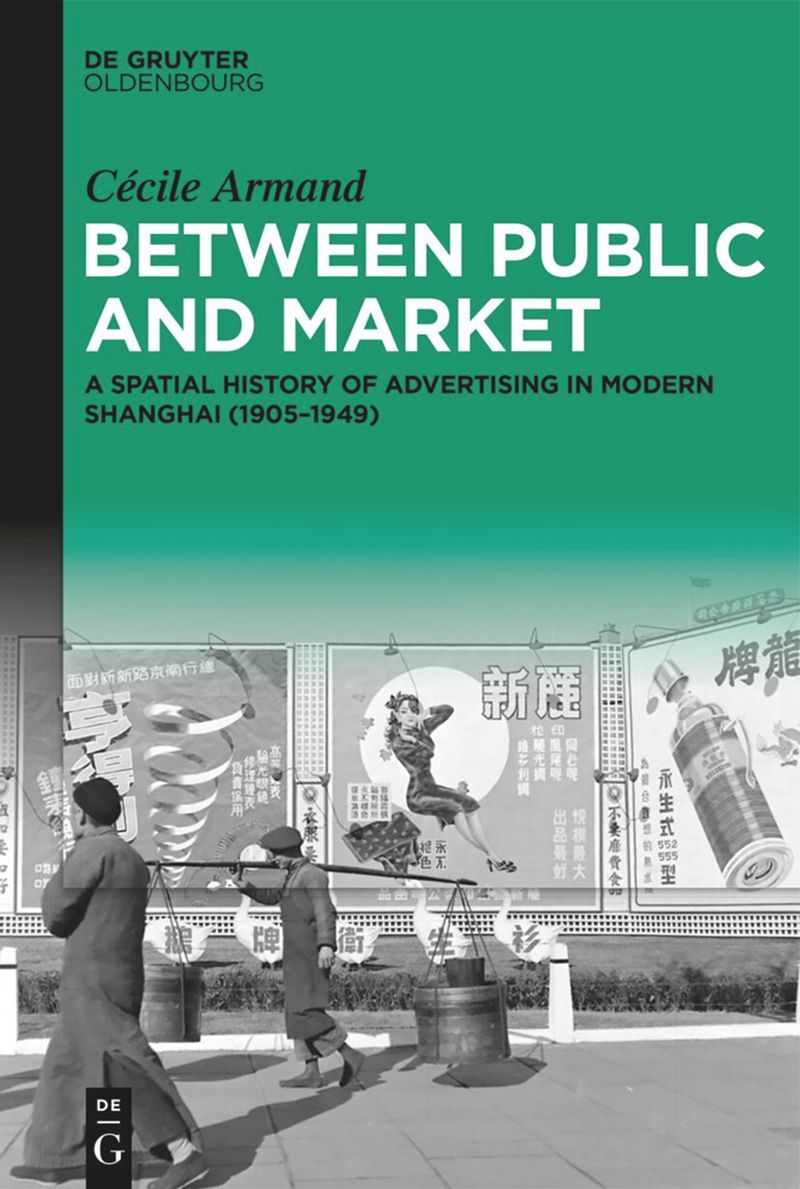
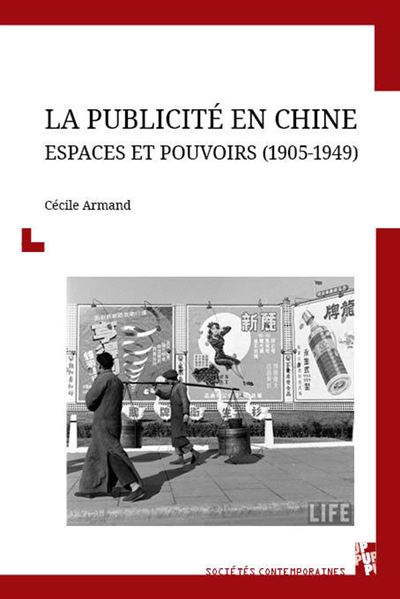
This article seeks to move beyond mainstream scholarship that predominantly focuses on representations by shifting the analytical lens from the press to outdoor advertising in modern Shanghai (1905–1949). By examining the material and social dimensions of advertising, it traces the emergence of landscape consciousness through three distinct phases. Until the 1920s, both municipal authorities and the public regarded outdoor advertising as a potential threat to urban aesthetics, associating it with visual pollution and urban disfiguration. However, by the 1920s, advertising professionals, in an effort to legitimize their industry, reframed this negative perception, asserting that advertising could serve as a means to enhance the visual appeal of the city. Public opinion and industry advocacy ultimately compelled municipal authorities to clarify their landscape policies. Although both the International Settlement and the French Concession aimed to preserve residential districts, their regulatory approaches diverged: the former implemented prohibitive taxation, while the latter enforced coercive zoning. By the 1930s, landscape consciousness expanded to encompass concerns about public hygiene and social order, particularly in the context of war (1937–1945). This study of Shanghai’s advertising landscapes ultimately suggests that advertising spaces functioned as a laboratory for shaping new visual regimes and redefining urban experience in 20th-century China.
“De la défiguration à l’embellissement urbain : la naissance d’une conscience paysagère à Shanghai (1905-1949).” Revue d’histoire moderne et contemporaine, n° 65-3, 2018, 95-119.
This article is accessible in open access.
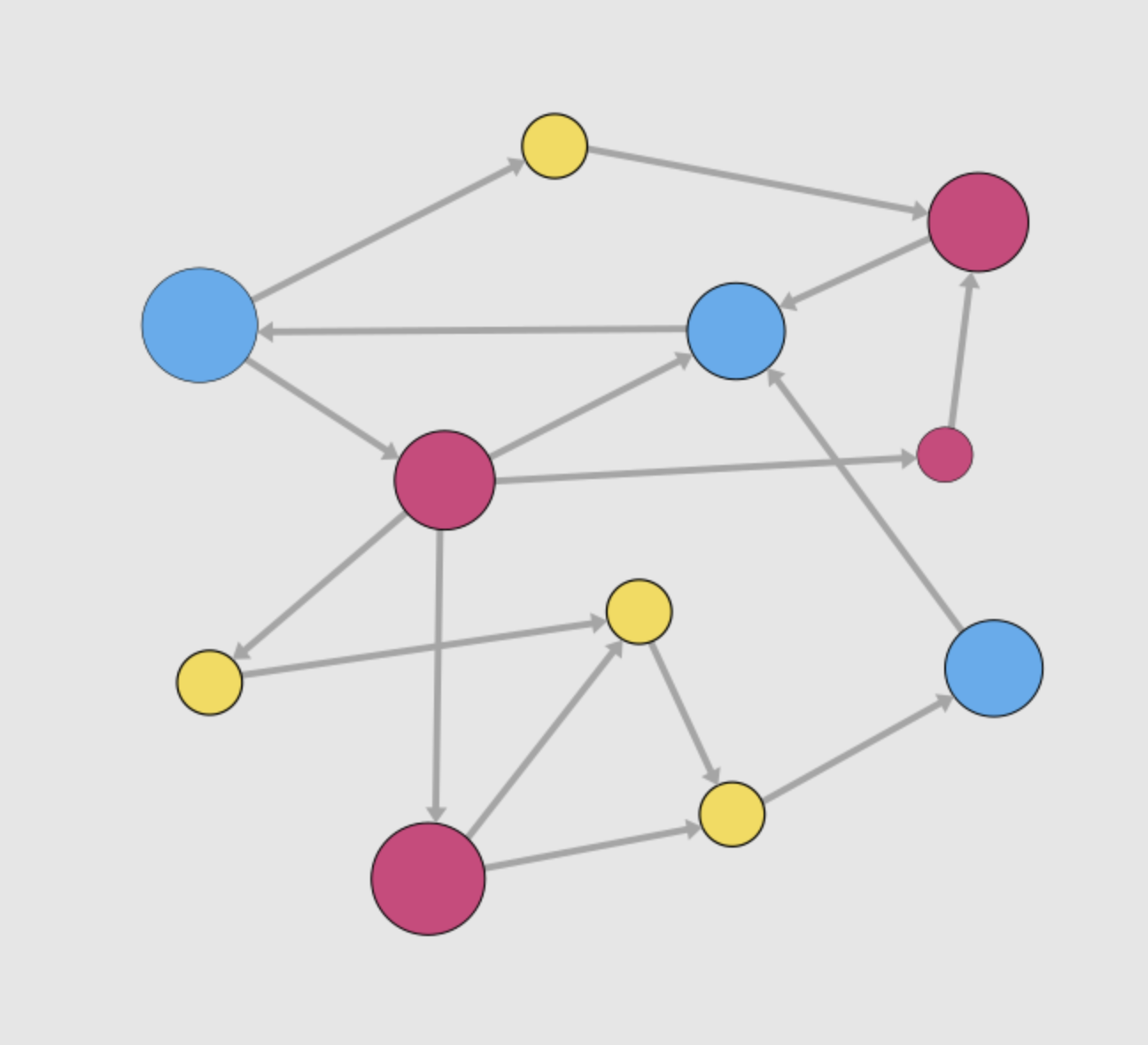
“Retour de Bournemouth : quelques réflexions historiennes sur The Connected Past: The Future of Past Networks ?” (22-25 August 2017). ARCS. Analyse de réseaux pour les sciences sociales, 2018/03.
This article is accessible in open access.
“Sonder les vestiges photographiques : une archéologie de la publicité urbaine à Shanghai (début du XXe siècle)”. Études de Communication, vol. 51, n°2, 2018, 115-50.
This article examines the use of street photographs as a tool for investigating the social and material history of outdoor advertising in early 20th-century Shanghai. Given the absence of reliable historical advertising archives in China, it explores both the potential value and limitations of historical photographs in identifying advertising media and agencies, assessing the dimensions and material characteristics of advertisements, and visualizing their physical environment and consumer interactions. Drawing from a rich yet heterogeneous corpus, this study outlines a general methodology that involves building photographic series, integrating multimedia sources, and developing a digital archive and historical database.
This article is accessible in open access.
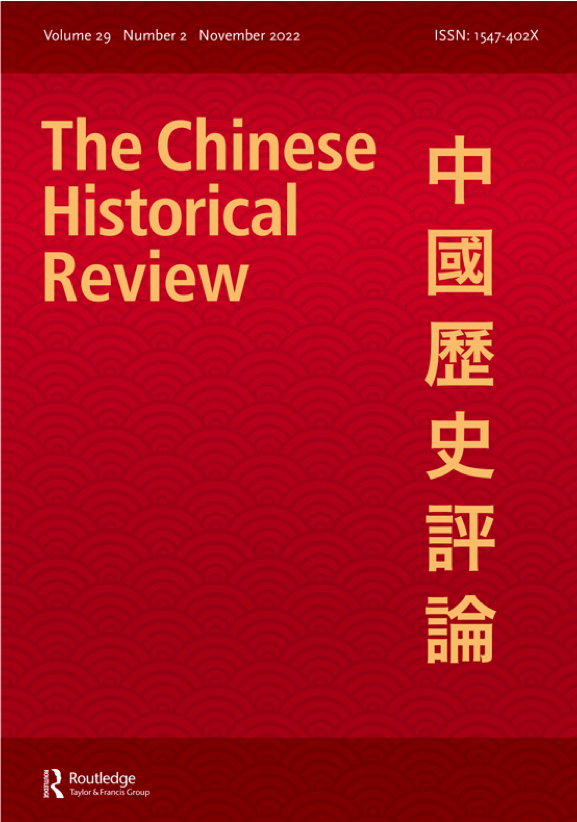
This paper introduces a photographic archaeology approach to examine the material, visual, and social impact of outdoor advertising in early 20th-century Shanghai. By integrating statistical analysis with photographic series and multimedia sources, this method uncovers the multilayered nature of advertisements as both material artifacts and urban elements. Advertisements were deeply embedded in municipal policies, commercial strategies, and the social life of commodities. While outdoor advertisers played a key role in reshaping Shanghai’s commercial culture and urban society, photographic evidence complicates narratives of increasing commercialization, the commodification of daily life, and the emergence of a “consumer society” in modern China. The photo-archaeological approach offers fresh insights into modernity, consumption, urban culture, and visuality in Chinese history.
“Digging Up Lost Billboards: A Photographic Archaeology of Outdoor Advertising in Early Twentieth-Century Shanghai.” The Chinese Historical Review, n° 25-2, 2018, 118-142.